A Better Tech Pouch Starts With Removing Half the Contents
Our buying advice is based on published specifications and documented features. The shop links below go to official stores and currently contain no affiliate tracking. Read our disclosure.
Gear to consider
Start with your use case. Check the store for the current price, compatibility, and availability.

The pouch looks organized until you need a cable on a train. Three black leads spill out, an old adapter catches the zipper, and the one connector you need is somewhere beneath a power bank. More pockets would not necessarily solve this. The kit has no clear boundaries.
A useful tech pouch is a portable workspace with a limited inventory. Start with the jobs you perform away from home, remove equipment that does not serve them, and only then decide how much organization to buy.
| Your kit | Organizer style | Main tradeoff |
|---|---|---|
| Charger and two cables | Simple compact sleeve | Less separation |
| Many tiny adapters and cards | Structured pouch | Pockets consume volume |
| Different specialist trips | Small core kit plus optional module | Requires deliberate trip packing |
Empty the kit and name every job
Place every item on a table and explain what it does on a normal trip. A laptop charger has a clear job. A mysterious adapter carried for three years needs a specific destination or device to justify its place. Separate everyday work, occasional travel, and genuinely specialized tasks instead of forcing all three into a permanent bag.
Keep an exception pouch at home if you sometimes need presentation adapters, camera leads, or other unusual connections. Add it for those trips. This is more practical than paying a daily weight and clutter cost for every possibility. Check that redundant items actually back up the same essential function rather than merely looking similar.
Build around the charger and its cables
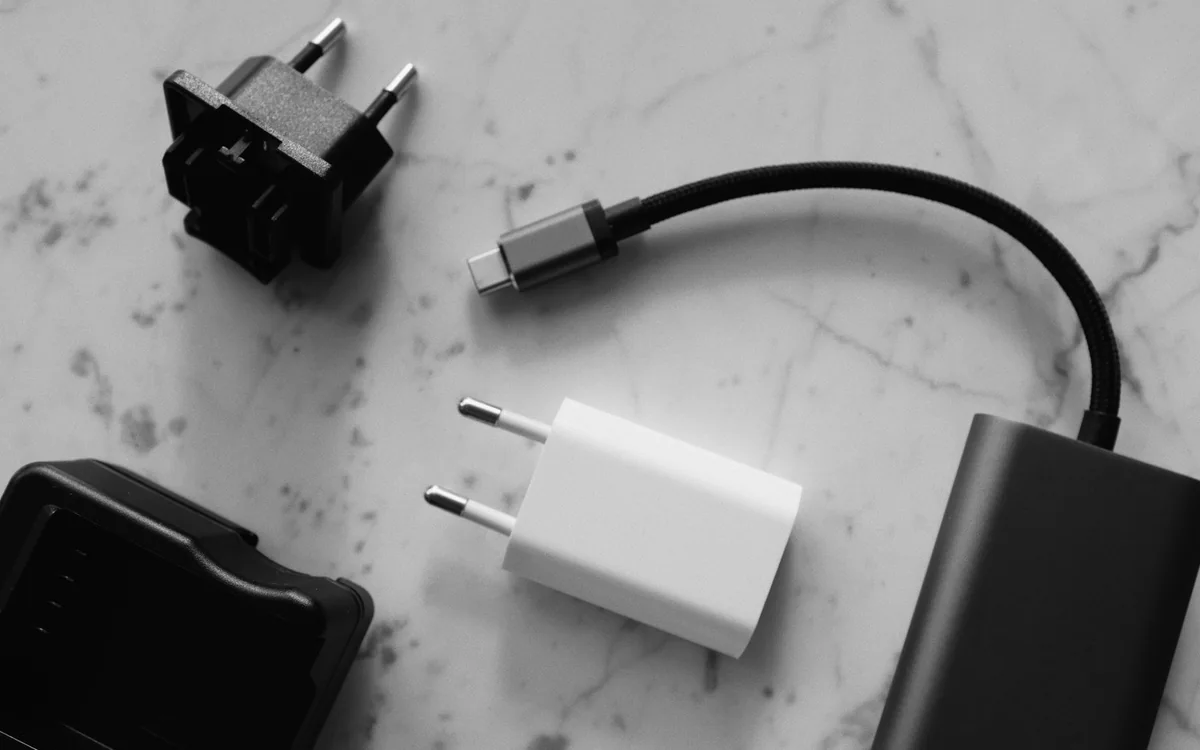
The charger is often the bulkiest fixed item, so choose the kit around its shape. Include the cables required by the devices you pack, with lengths that match how you use them. A short bank cable and a longer hotel cable can serve distinct jobs. Several identical medium-length cables may do neither job particularly well.
Use soft ties or loops that keep each lead separate without forcing tight bends near its connectors. Label high-power or display-capable leads if they are easily confused with ordinary charging cables. A pouch cannot resolve electrical compatibility; your organization should make that compatibility visible when you are tired, rushed, or working in poor light.
Choose structure only where it helps
Peak Design offers Small and Regular Tech Pouch options, providing a concrete structured-organizer starting point. Compare the exact selected size and internal arrangement with your actual inventory. Product photographs showing many perfectly spaced accessories are illustrations of capacity, not evidence that the pouch will suit your charger, bank, and bag opening.
Structured pockets can make small items easier to see, but they also occupy volume. A simple zip sleeve may be better for a charger and two leads. If your bag already contains good internal organization, another heavily divided pouch can duplicate it. Buy enough structure to prevent tangles and lost items, not enough pockets to encourage filling every slot.
Give transit essentials a separate path
The cable you use on a train should be reachable without pulling out the whole overnight kit. Likewise, earbuds and a phone reserve may belong in a small-access pocket rather than beneath the laptop charger. Think through the physical sequence: open bag, reach item, connect device, and put everything away while seated.
Avoid storing loose small batteries or exposed electrical contacts among metal objects. Follow the manufacturer's storage guidance for powered equipment and avoid pressure on connectors. Do not assume a pouch is waterproof or protective against impact unless that property is documented for the product and suitable for the situation. Organization and protection are related but different purchasing requirements.
Use a departure check that takes seconds
Assign the same location to each essential item. When packing, an empty pocket should tell you what is missing without a long inventory. Keep the charger, primary cable, and any proprietary watch or camera charger easy to count. A compact card with the essential kit can help when several people share accessories, but do not turn packing into another complicated system.
After a few trips, remove anything that never serves a realistic need and adjust the places that cause repeated friction. Skip a premium organizer if your current simple bag already makes the kit easy to retrieve and check. The valuable purchase may be one appropriate replacement cable, not a larger container for the clutter you already own.
Common questions
Should I buy the biggest pouch that fits my backpack?
Choose the smallest size that comfortably holds the necessary kit. Extra capacity often becomes an invitation to carry unused accessories.
Is a structured pouch always better?
No. It helps with many small items, but can duplicate your bag pockets and add bulk around a simple charger setup.
How many spare cables should I carry?
Carry backups for essential functions that would be difficult to replace during the trip. Confirm that the spare actually supports the required connector and power or data capability.
Sources & editorial notes
Manufacturer and support documentation checked for this guide. Features, regional availability, and prices can change. Our recommendations apply those documented features to everyday scenarios; they do not represent hands-on testing.
- Peak Design official Tech Pouch size options and intended contents · Checked 2026-10-19
Found an error? Tell the editorial desk with the article link and a supporting source.